Is a deli sandwich taxed like food or like a meal out?Is a deli sandwich taxed as food or as a meal?
Example price
$33
Example all in
$36
tax included
Example earn first
$51
Single filer on $75,000 in Harris County, Texas. Your calculator below uses your settings.
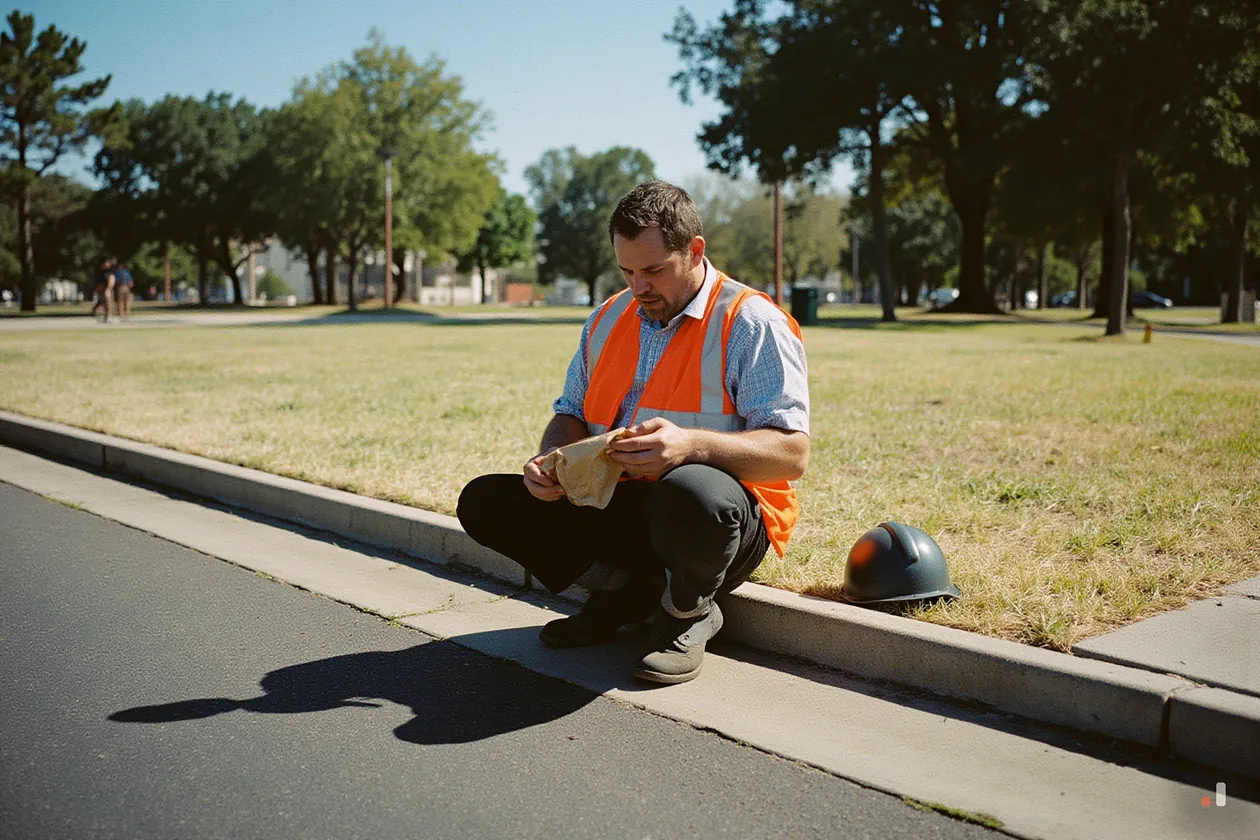
Made to order, heated, or cold from the chiller — one sandwich, three answers.
Made to order, heated, or sold cold from a chiller — three answers, one sandwich.
Food made for you is taxed almost everywhere, and a sandwich built to order counts. Take the same sandwich pre-wrapped and cold from the chiller and several states call it groceries instead. Ask for it heated and it usually flips back. What the tax follows isn't the ingredients. It's how much was done for you. And plenty of cities add a meals tax on top, so your state's rate isn't the full story.
Prepared food is taxable almost everywhere, and a sandwich made to order is prepared food. The same sandwich pre-packaged and sold cold from a chiller is groceries in a number of states, and heating it moves it back again in most of them. The tax is tracking the service rather than the ingredients, which is why the identical lunch can carry three different answers inside one shop. Many cities then add a meals tax on top, so the state rate is not the whole story either.
- We treat it as prepared food at your state's normal rate, which fits a sandwich made to order.Modeled as prepared food at your state's standard rate, which fits a sandwich made to order.
- A pre-wrapped cold sandwich counts as groceries in some states. We don't model that.A pre-packaged cold sandwich is groceries in a number of states. That treatment is not modeled.
- Lots of cities add their own meals tax. That isn't counted here.Local meals taxes are charged by many cities on top of the state rate and are not included.
to cover a deli sandwich
- Income tax (federal, FICA, state)30%$15
- Sales tax5%$3
- Deli sandwich65%$33
- Income tax (federal, FICA, state)
- Sales tax
- Deli sandwich
Data for nerds — sources, confidence and assumptions
Data for nerdssources, confidence, assumptions
Where each number comes from
| Component | Amount | Confidence |
|---|---|---|
| Item price | $33.00 | Your figureHigh confidence. You supplied this, so it is exact by definition. |
| Sales tax | $2.72 | JurisdictionalMedium confidence. The right jurisdiction, but special districts within it can vary — bounded, and we know the range. |
| Income tax to earn it | $15.06 | StatutoryHigh confidence. This number is the law — federal, FICA and state tax rates are published rates, so the only real risk is staleness. |
Jurisdiction applied
- State:
TX - Sales tax county:
Harris County (Houston) - Local income tax: none selected
Assumptions
- We treat it as prepared food at your state's normal rate, which fits a sandwich made to order.
- A pre-wrapped cold sandwich counts as groceries in some states. We don't model that.
- Lots of cities add their own meals tax. That isn't counted here.
- Modeled as prepared food at your state's standard rate, which fits a sandwich made to order.
- A pre-packaged cold sandwich is groceries in a number of states. That treatment is not modeled.
- Local meals taxes are charged by many cities on top of the state rate and are not included.
Sources
- Tax Foundation — how states tax groceries, candy and soda (2025) as of 2026-01-01
If this is a habit
$26,406 over 10 yrsDeli sandwich, every week — $2,641 of income every year, and 1.8 work weeks of your life.
Year by year
| Year | Spent | Invested instead |
|---|---|---|
| 1 | $1,857 | $1,857 |
| 2 | $3,715 | $3,845 |
| 3 | $5,572 | $5,971 |
| 4 | $7,430 | $8,247 |
| 5 | $9,287 | $10,682 |
| 6 | $11,145 | $13,287 |
| 7 | $13,002 | $16,074 |
| 8 | $14,860 | $19,057 |
| 9 | $16,717 | $22,248 |
| 10 | $18,574 | $25,663 |
Prices and wages are held at today's levels, and the return above is inflation-adjusted to match — consistent by design. The invested-instead line assumes the cash is contributed at the end of each year and left alone; it is an alternative use of the same money, never an extra cost on top.
Your position in the tax system
29.65% on the next dollarEvery extra dollar you earn is taxed at your marginal rate, not your average one — which is why a purchase costs more to fund than a paycheck stub suggests.
Marginal rates are read in gross-income terms: below the standard deduction an extra dollar of pay adds nothing to taxable income, so the true rate there is 0%, not the lowest bracket's. Excludes pre-tax deductions (401(k), HSA), which would lower all three.
Same purchase, different state
TX is #7 of 51The purchase inputs and income stay the same. Your row uses your calculator settings; other states use example counties and omit local income tax. Spread across all 51: $11, from New Hampshire to California.
- $47
- Texasyou$51
- $58
Choose a state name to compare against somewhere else.
Where every dollar goes
30% never reaches youThe $50.78 you must earn, followed to where it lands. Select a band to isolate it.
- Federal income tax$11.17
- FICA (Social Security + Medicare)$3.89
- Deli sandwich$33.00
- Sales tax$2.72
Each tax layer is the extra tax this purchase causes — that layer's tax at your income subtracted from its tax at your income plus the gross-up — so bracket boundaries the purchase straddles are handled correctly rather than smoothed over with an average rate.
Is a raise actually a raise?
you keep 70%A raise arrives on top of everything you already earn, so it is taxed at your marginal rate — not the average rate on your whole salary.
Federal, FICA, state and any local income tax — no pre-tax deductions, benefit changes, or payroll withholding quirks, all of which move the real figure. Moving into a higher bracket never taxes the income below the threshold: only the dollars above it pay the higher rate.
Keep going
What you must earn to buy it
A $75,000 Texas salary
| Sticker price | $33.00 |
|---|---|
| Sales taxHarris County (Houston) | $2.72 |
| Out of pocket | $35.72 |
| Income tax on earning it | $15.06 |
| Hours of work | 1.4 hr |
29.66% of that pay never reaches the purchase.
Sales tax on this purchase
A $75,000 Texas salary
| Tax added | $2.72 |
|---|---|
| Rate appliedHarris County (Houston) | 8.25% |
Uses this location’s stored combined rate and category rule. Clothing is one item; address-level coverage varies.
If the money stayed put
A $75,000 Texas salary
| Spent today | $36 |
|---|---|
| Growth given up | $28 |
| Pay needed to buy it | $51 |
Assumes a 6% annual return that you can edit.
A year of that habit
A $75,000 Texas salary
| Spent a year | $9,287 |
|---|---|
| You must earn | $13,201 |
| Times a year | 260 |
Work hours include time spent earning the tax.
What it adds up to
A $75,000 Texas salary
| Cash paid | $4,286 |
|---|---|
| Hours of work | 4.2 work weeks |
| A year | $429 |
| Growth given up | $1,363 |
Today’s price held constant; no price rises assumed.
Questions people ask
Why does a small regular cost need such a big salary behind it?
It comes out of take-home, and take-home is what survives tax. Each repeat has to be earned in full before tax, which is why a modest weekly figure needs a much larger salary standing behind it.
Does this cost the same in every state?
The price might, the tax does not. States classify this category differently, and the figure changes with the one you select.
What does this figure leave out?
Enough to be worth saying out loud. The limits are listed on this page, because a figure that hides its own edges is more misleading than one that admits them.
Why does a recurring outlay require disproportionate gross income?
Consumption is funded from post-tax income, so required gross income is the outlay divided by one minus the marginal rate on the relevant income slice. For a recurring cost that grossed-up figure recurs at the same cadence, which is why annualised gross requirement exceeds the nominal annual outlay by the full marginal wedge.
How does state tax treatment vary for this purchase?
Sales tax treatment of this category is determined at state level, with local add-ons layered on top where they exist. Classification varies between full exemption, a reduced grocery-style rate and the standard rate, so aggregate burden is not comparable across states without specifying the jurisdiction.
What are the stated limits of this category's model?
Modeling limits for this category are stated explicitly on the page rather than inferred. They typically concern classification edge cases, per-item caps, or local levies outside the modeled base. Where a limit applies to a reader's specific purchase, the figure should be treated as a lower or upper bound as the note describes.
- Tax Foundation — how states tax groceries, candy and soda (2025)— as of 2026-01-01